









KYC Data Verification API for Developers: High-Throughput Identity Intelligence

ESPY provides a developer-ready identity enrichment API that helps KYC vendors strengthen customer onboarding and risk-review workflows with additional digital intelligence. Using phone numbers, email addresses, names, social identifiers, or facial images, KYC platforms can retrieve available identity attributes, connected social accounts, digital footprints, exposed-data indicators, and potential face matches. Results are delivered in structured formats for integration into customer-managed KYC, fraud-prevention, and identity-verification systems. ESPY provides enrichment and risk signals to support verification decisions, while the customer remains responsible for reviewing the results and making the final onboarding or compliance decision.

Async Query Processing

Query Responses

7 Unified Signal

Sources

Schema-Valid

JSON Payloads

Beyond Static Databases: Live Intelligence for Modern KYC Engines

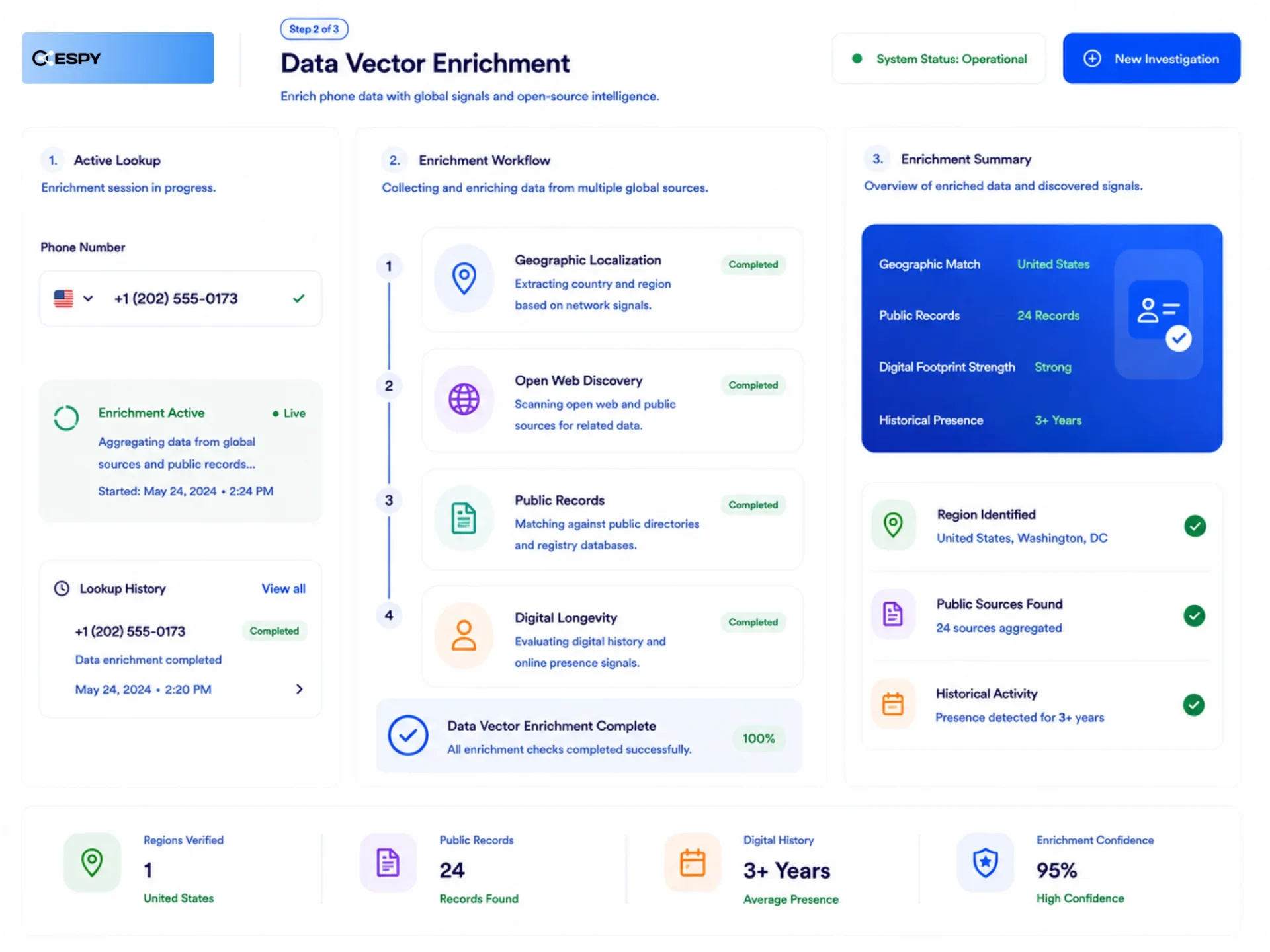
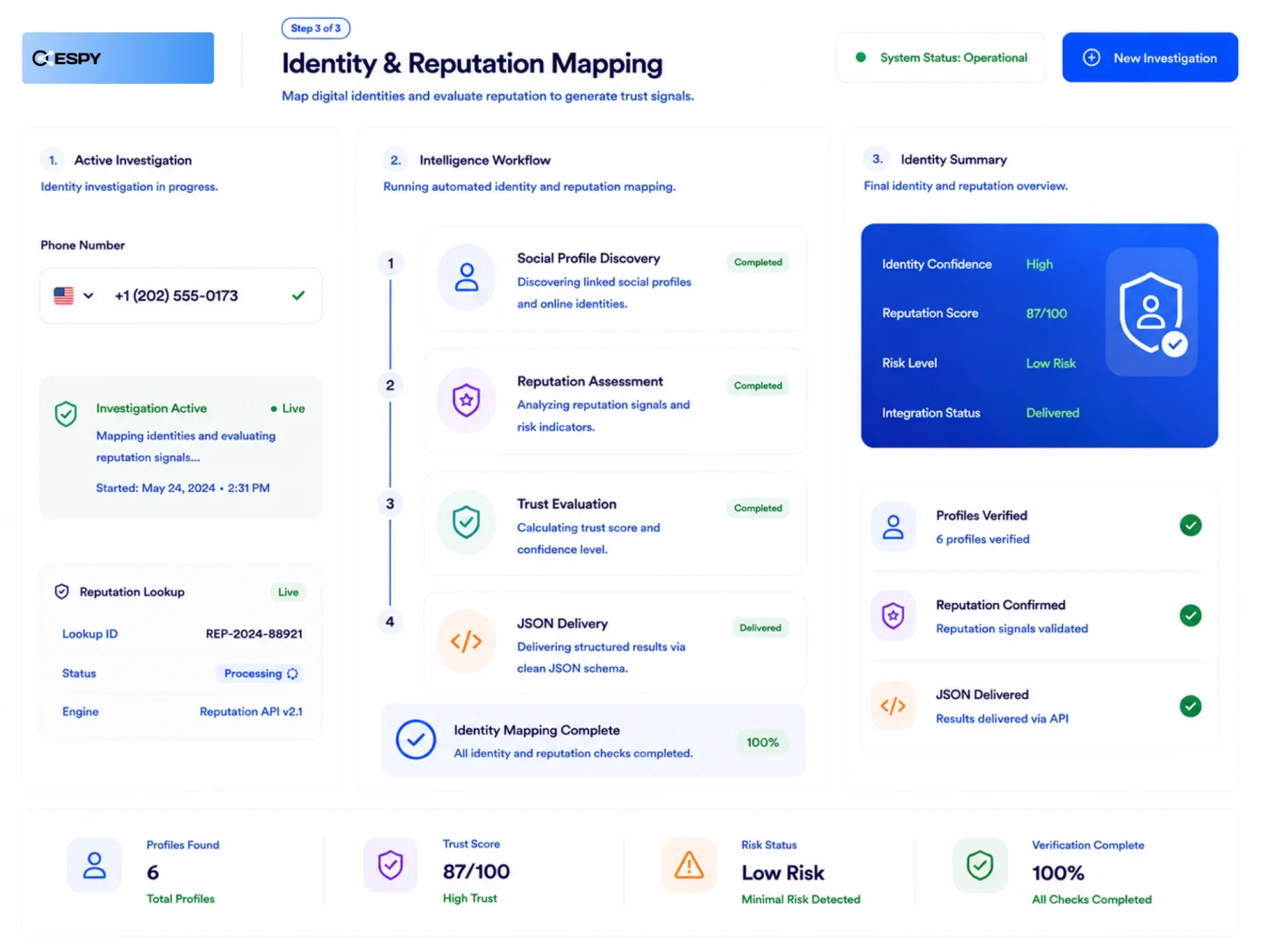
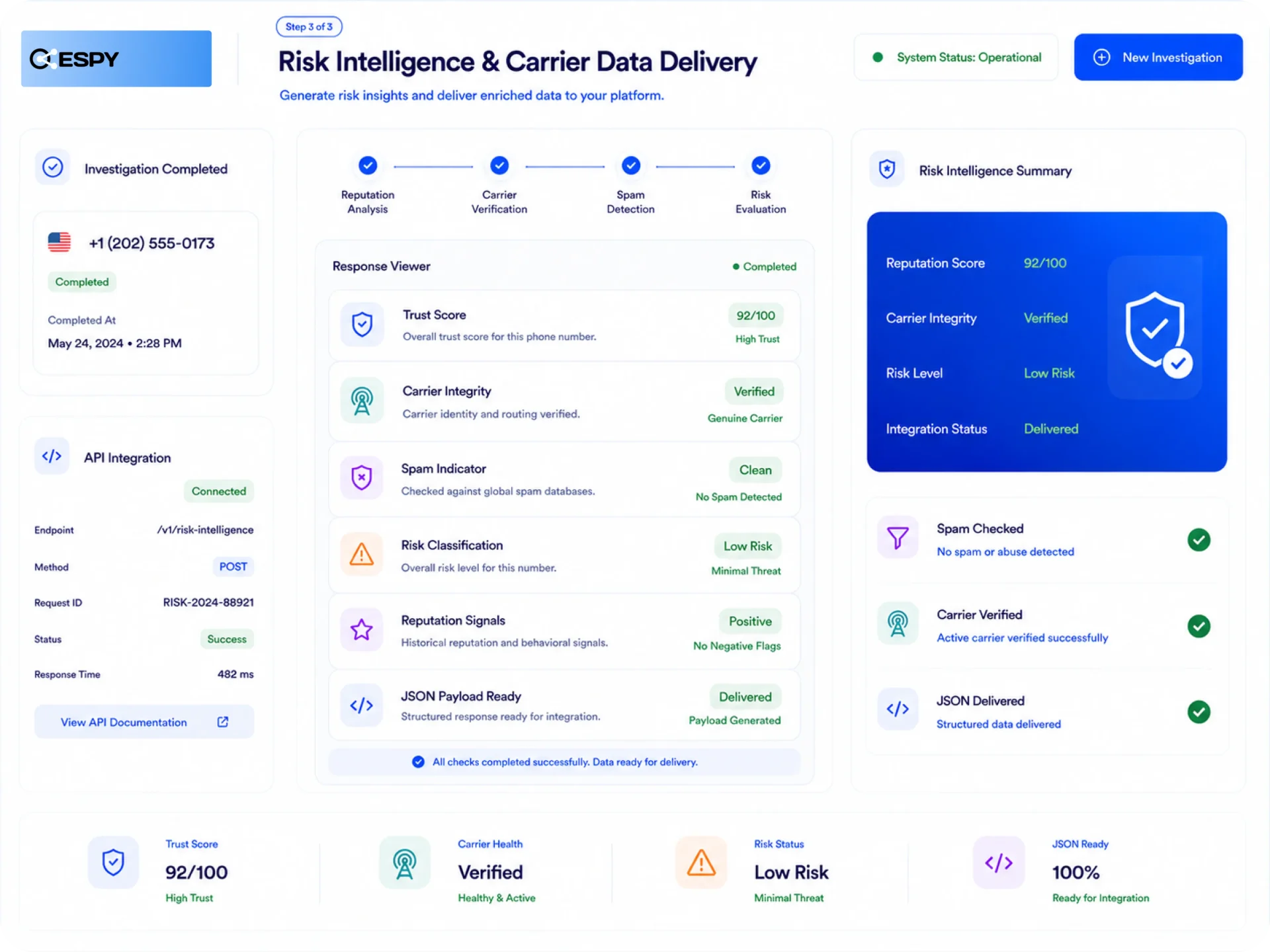
Traditional identity checks rely on stale database snapshots that miss live digital footprints and risk anomalies. ESPY’s data enrichment infrastructure executes real-time network probing, open-web scanning, and multi-source parameter correlation during every query, streaming fresh risk signals directly into customer-managed verification backends.

Multi-Identifier Ingestion

Submit single or multi-attribute queries-phone numbers, emails, legal names, social handles, or facial images-to trigger multi-vector enrichment across public web indexes and carrier networks.

Real-Time Signal Extraction

Extract active carrier telemetry, messaging-app presence indicators, and exposed-data markers in real time without building or maintaining complex custom extraction pipelines.

Structured Delivery & Governance

Ingest standardized JSON payloads directly into internal decision engines. ESPY delivers intelligence signals to support verification, leaving full governance and final onboarding decisions in your control.

More Than a Form Checker. Built for High-Density Identity Enrichment.

Enrich submitted parameters with context-rich identity signals to automate preliminary screening and streamline manual compliance reviews.

Phone & Email Intelligence

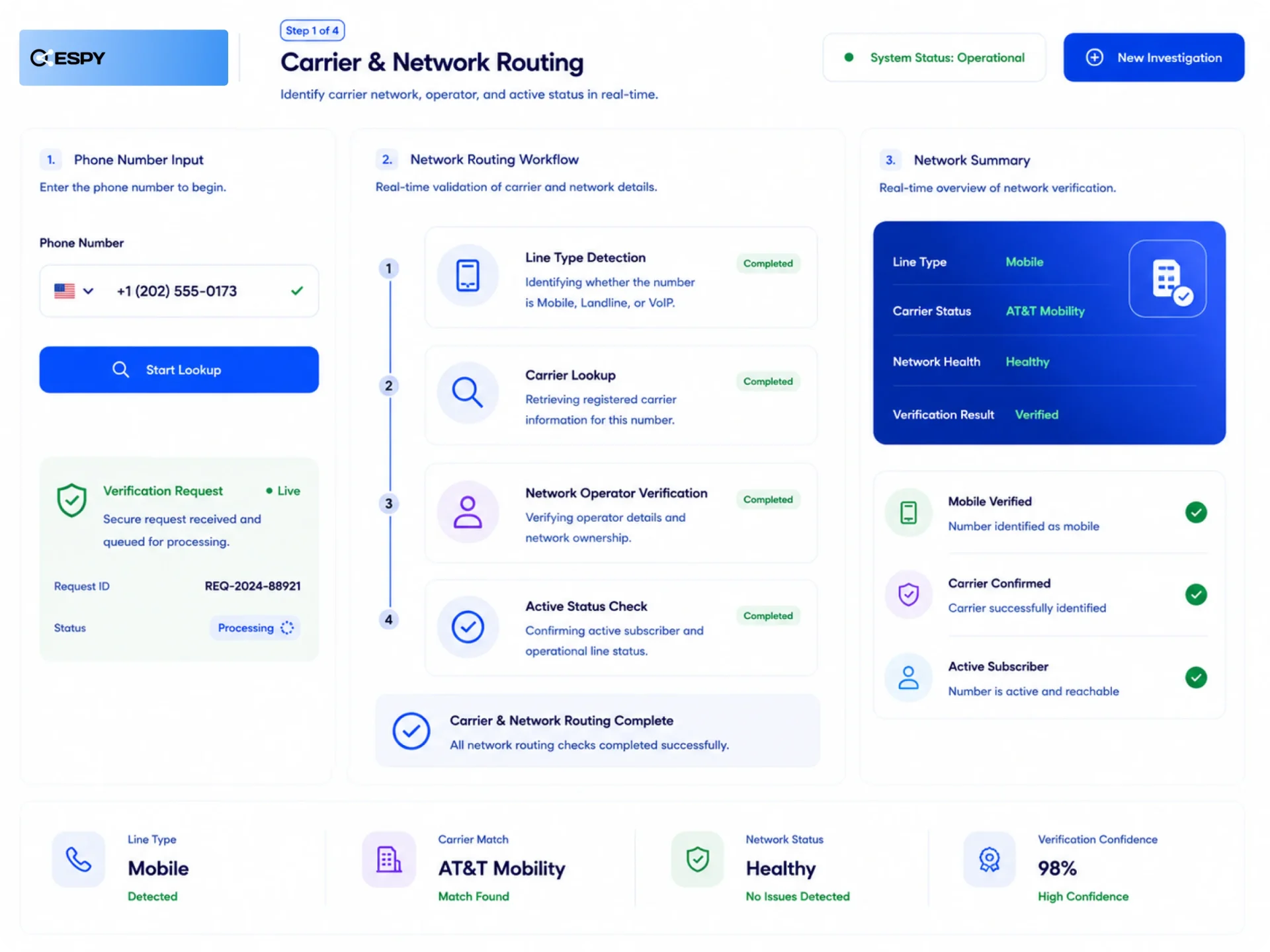
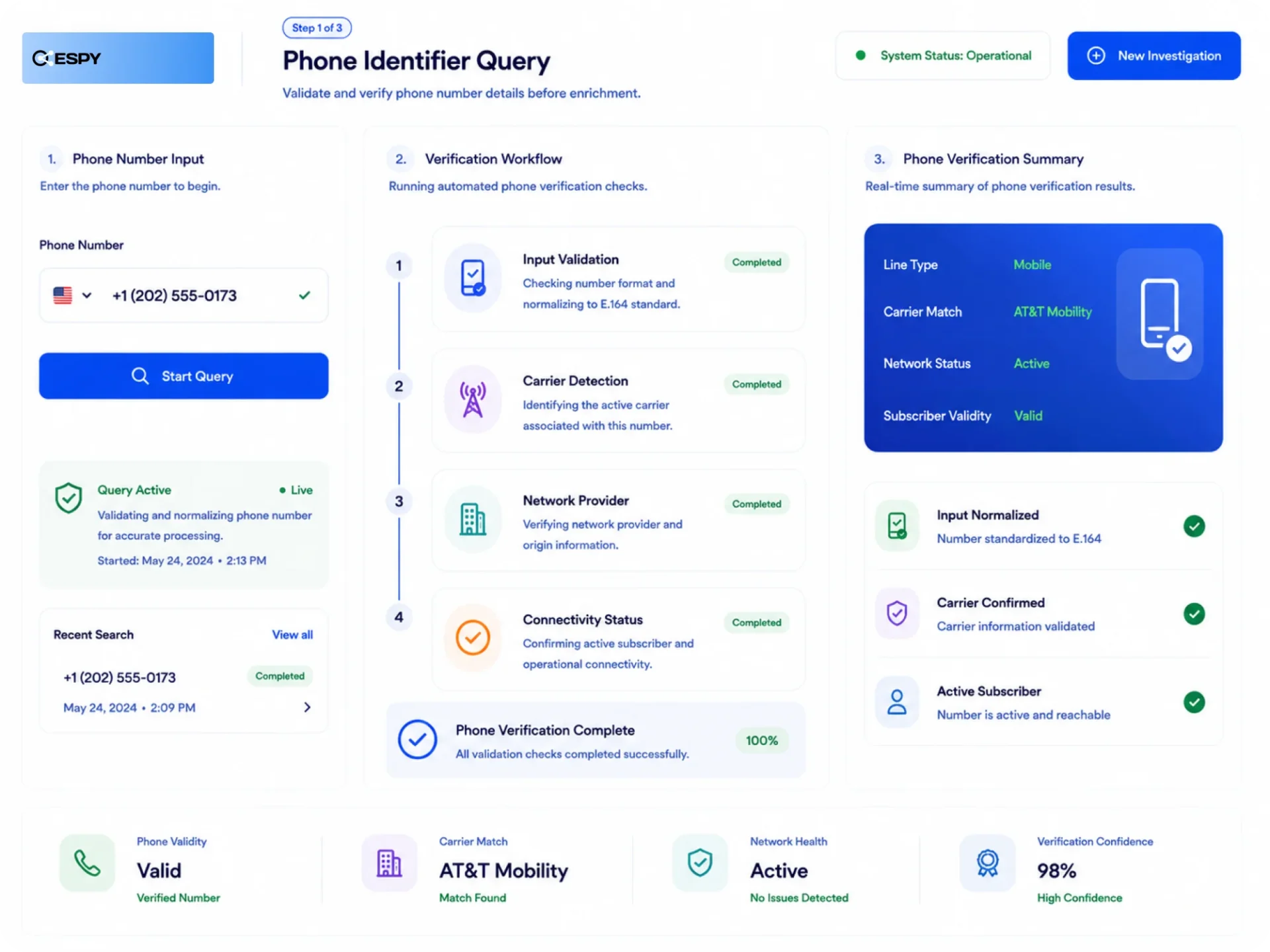
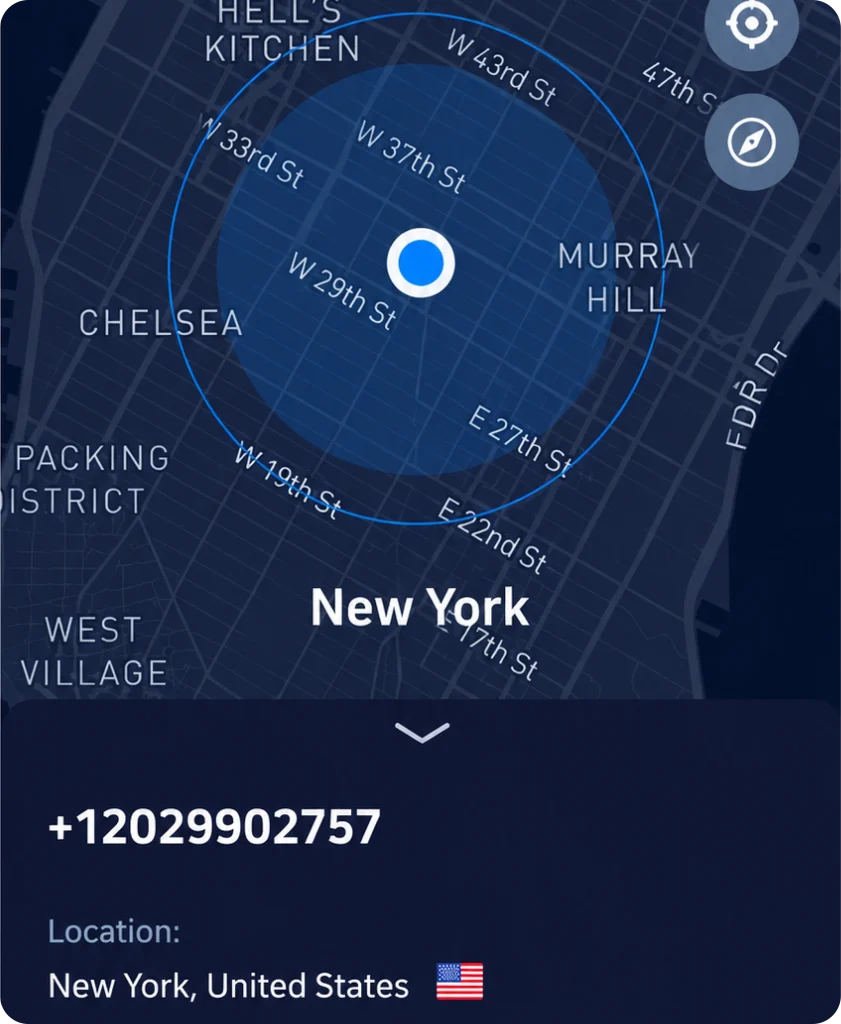
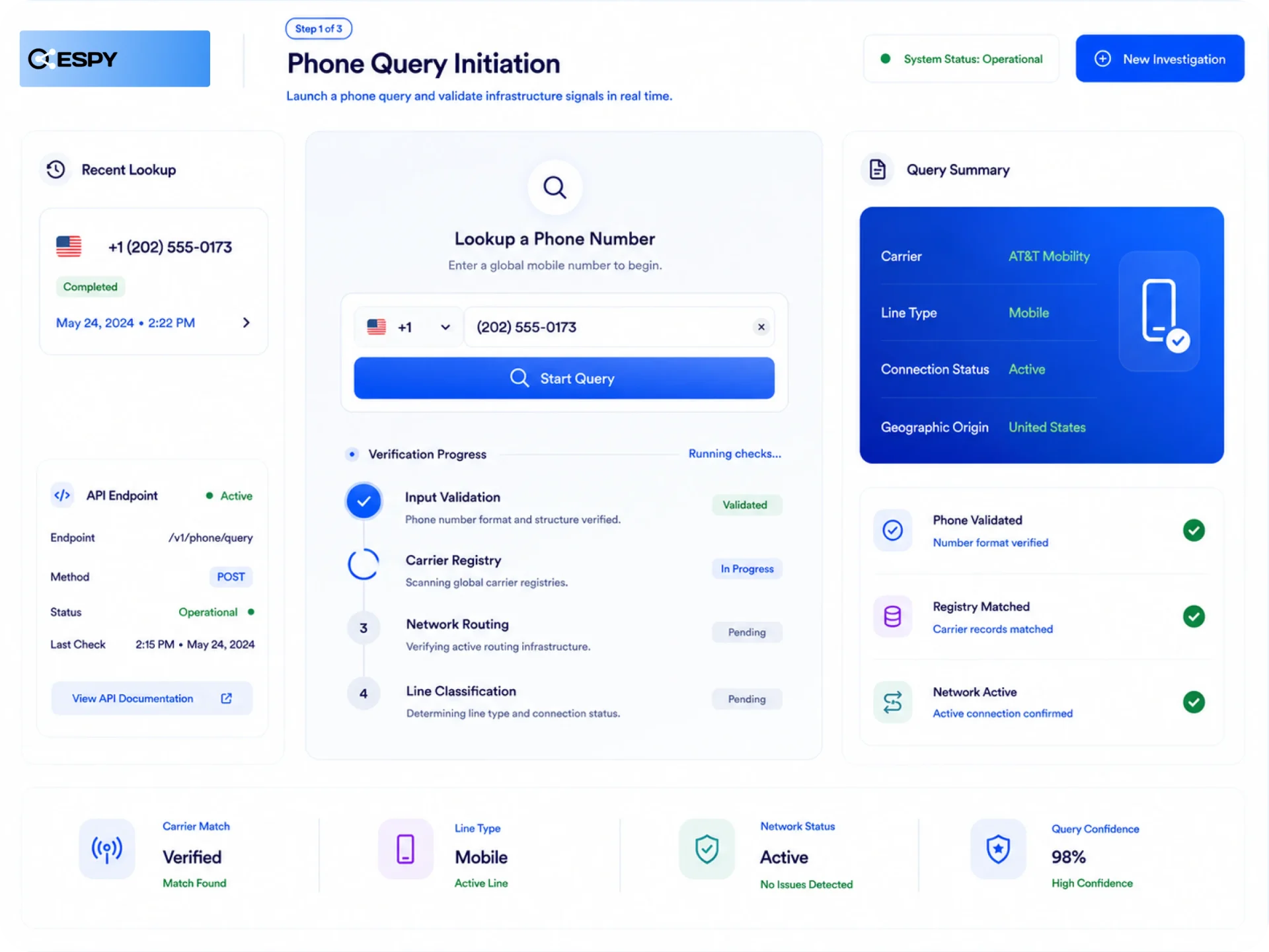
Enrich submitted phone numbers and email addresses with live carrier telemetry, line classification, messaging-app presence, registered service footprints, and domain health markers.

  • Line Type & VoIP Verification: Validates line classification (Mobile/VoIP/Landline), virtual provider footprints, and temporary number markers in real time.
  • Domain & Infrastructure Health: Checks email domain health, MX record configurations, and associated public service registrations.
  • Risk Signal Filtering: Returns clean identity signals to detect high-risk, disposable, or unverified contact parameters.

Social Discovery & Exposed-Data Indicators

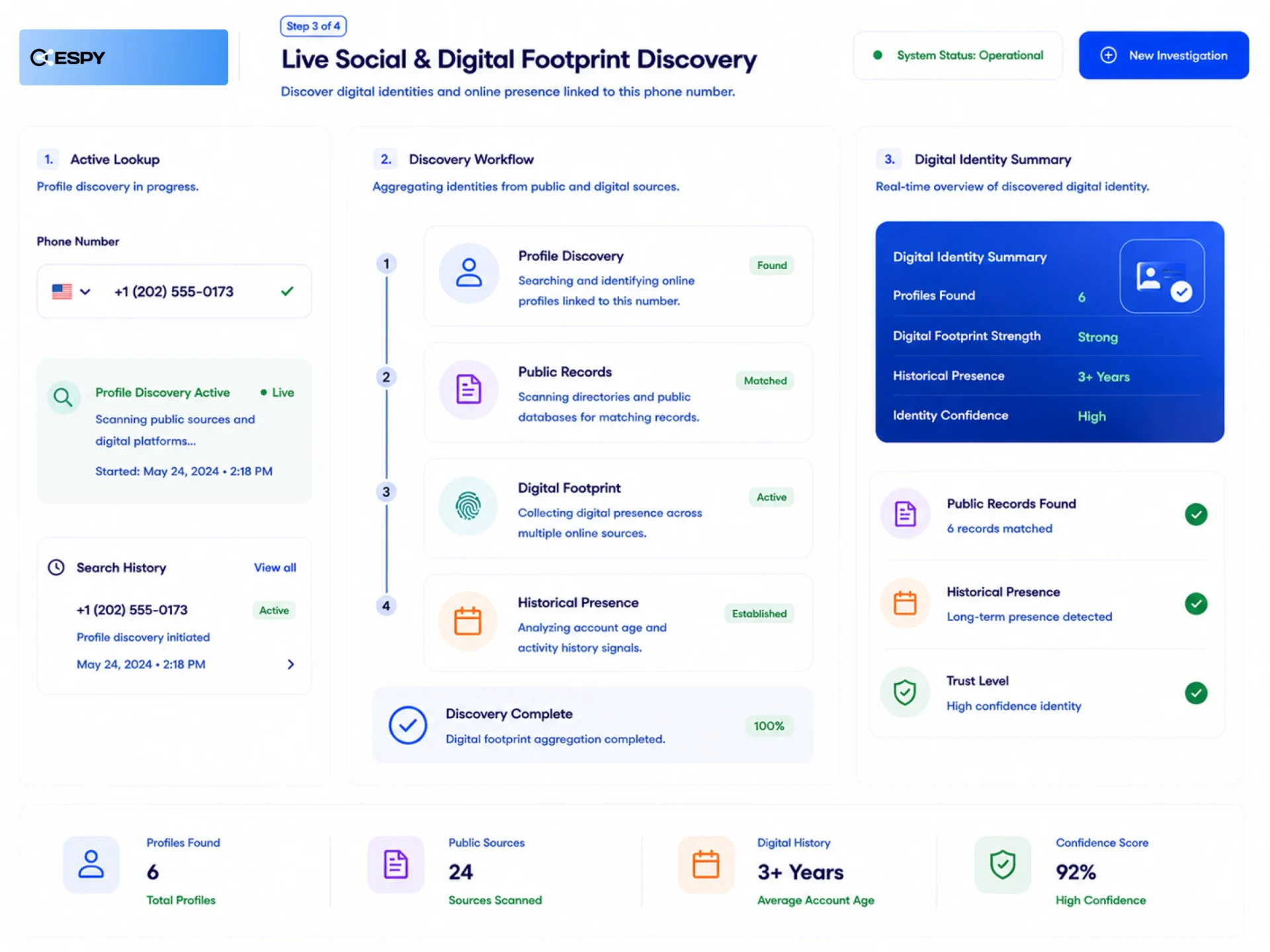
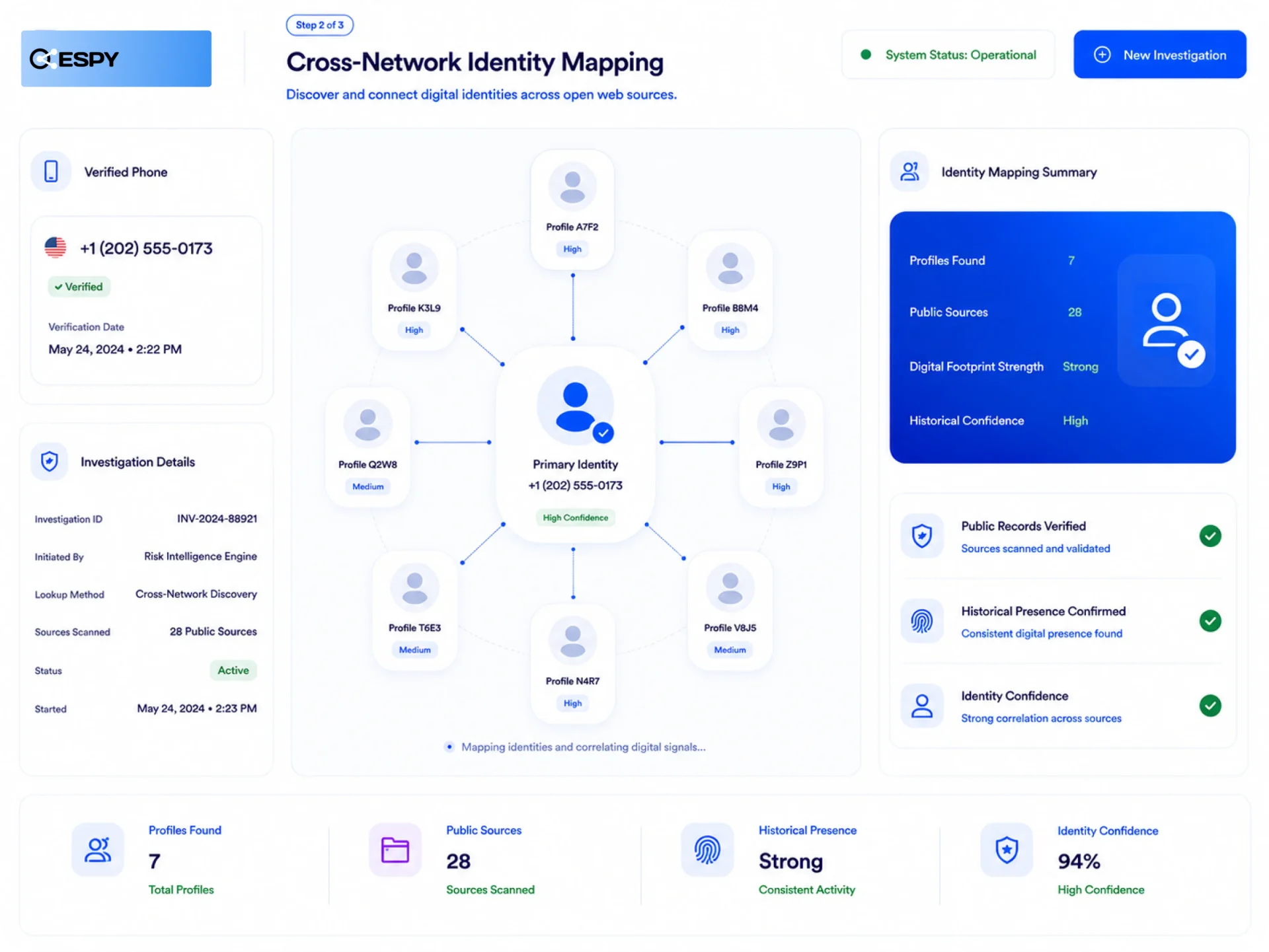
Discover publicly available social profiles and cross-reference contact inputs against supported breach repositories to identify historical exposure or potential account takeover risks.

  • Multi-Platform Account Mapping: Maps publicly accessible social profiles and digital accounts linked to submitted identity parameters.
  • Breach & Exposure Metadata: Flags presence in supported exposed-data repositories with contextual breach metadata.
  • Investigation Acceleration: Delivers actionable digital footprint history to accelerate manual compliance investigations.

Face Search & Name Correlation

Execute visual similarity searches across indexed open-web sources and correlate multi-attribute payloads to identify consistent or conflicting identity signals.

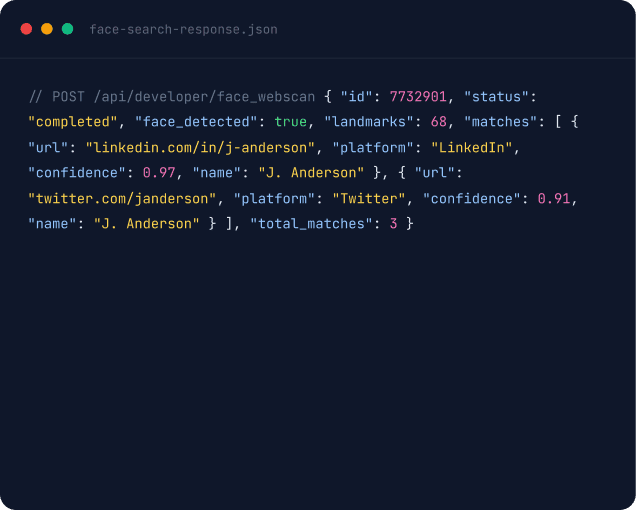
  • Visual Similarity Indexing: Searches indexed open-web sources for visually similar facial vectors and returns candidate matches for review.
  • Fuzzy String Normalization: Normalizes naming variations, regional formatting, and structural typos using fuzzy string algorithms.
  • Attribute Discrepancy Detection: Compares available attributes across results to help KYC providers spot identity inconsistencies.

Enterprise Data Enrichment Workflows

Connect real-time identity enrichment directly into your sign-up flows, risk rules, and analyst review queues to automate pre-screening and speed up manual reviews.

Need to start with limited parameters? ESPY API can enrich user profiles and discover identity connections using a single phone number, email address, or facial image via a unified RESTful endpoint.

Examples of Available Identity Signals

High-performance queries delivered in a clean JSON response, optimized for real-time risk orchestration engines where latency is critical.

What Can ESPY KYC Enrichment Reveal Beyond a Simple Match?

Uncover actionable technical context across contact parameters, visual identity, and exposed data to inform automated risk logic.

Phone Line Classification & VoIP Status

Inspect submitted phone numbers to determine line types (Mobile, Landline, VoIP), active validity, and virtual provider indicators.

Email Infrastructure & Service Footprint

Evaluate email domain health, MX record configurations, and active service presence to separate legitimate user inputs from temporary inboxes.

Connected Social Profiles & Accounts

Discover publicly accessible social profiles and digital accounts linked to submitted phone, email, or name parameters.

Breach Repository Context & Indicators

Identify whether submitted contact details appear in supported exposed-data repos and retrieve contextual threat indicators.

Open-Web Visual Similarity Matching

Retrieve visually similar facial vectors and potential face matches across indexed open-web sources for manual review.

Fuzzy Name & Profile Correlation

Compare naming variations, legal aliases, and structural typos across multiple sources to highlight consistent or conflicting identity signals.

Verification Infrastructure Engineered for Modern Product Teams

ESPY’s Data Enrichment Infrastructure helps enterprise engineering teams cross-reference raw user registration inputs with live open digital sources and line validity status. Built as a high-performance RESTful pipeline, the system transforms unstructured telemetry into structured JSON signals for automated onboarding and account protection workflows.

High-throughput async query pipeline

Query Latency

Live Scan

Execution

Multi-Language

SDK Support

ESPY’s analysis engine evaluates identity data patterns across available digital footprints, phone line status, and open-web networks to supply risk signals. Engineered for software architects and product leaders, the architecture combines a high-throughput RESTful API with production-ready SDKs to deliver reliable, developer-ready telemetry data streams.

Enrich, Correlate, and Resolve Identity Signals

ESPY provides the technical data infrastructure necessary to connect user registration inputs with verified identity signals. Our platform combines high-precision fuzzy matching, open-web scanning, and live telemetry ingestion into a unified, developer-ready interface.

Identity Identification

  1. Parse and standardize messy or incomplete user inputs using fuzzy string matching across submitted legal names, usernames, email addresses, or phone numbers.
  2. Map connected digital footprints, public social accounts, and exposed-data history to bridge the gap between a signup parameter and an enriched profile dossier.
  3. Maintain high query resolution accuracy when evaluating regional naming order, accent variations, or mistyped registration parameters through automated cleansing logic.

Digital Telemetry Data Ingestion

  1. Query phone network telemetry nodes to determine line classifications (Mobile, Landline, VoIP) and virtual provider footprints in real time.
  2. Check submitted email parameters against MX configuration checks, domain age metrics, and supported breach repositories instantly.
  3. Enrich verification pipelines by streaming raw signup queries into normalized confidence weights, execution latency logs, and auditable signal metadata.

Monitoring & Webhook Automation

  1. Execute synchronous Webhook notifications to stream structured enrichment payloads directly into internal decision engines, CRMs, or risk tools.
  2. Cross-reference multi-attribute inputs (including facial vectors and contact data) to flag discrepancies between provided details and discovered digital profiles.
  3. Streamline enterprise onboarding, trust decisioning, and compliance reviews with schema-valid, real-time JSON payload streams.

Why Technical Leaders Choose ESPY?

Compare traditional static database lookups with ESPY’s real-time identity enrichment layer.

Legacy: Traditional KYC & Onboarding Checks

ESPY: KYC Verification API

Real-Time Breach Monitoring for Modern Applications

Developer-First Breach Data Routing.

ESPY converts exposed account activity and breach data into structured JSON feeds designed for authentication systems, onboarding workflows, and fraud prevention platforms.

Built for high-volume, low-latency environments, ESPY provides developers with real-time breach monitoring infrastructure for modern product workflows.

Trusted by developers, system architects, and trust and safety teams worldwide.

Ronald Richards

CEO & Founder

How ESPY Data Enrichment Workflows Work

Connect low-latency identity verification and risk scoring to your application in minutes. ESPY gives developer teams the pipelines to automate account checks, no matter the query volume.

Ingest Parameters & Query Endpoint

  1. Multi-Parameter Ingestion: Submit single or multi-attribute inputs (Phone, Email, Name, Image) via REST API or native SDK.
  2. Native SDK Integration: Production-ready SDKs for Node.js, Python, and Go enable fast integration into existing backend codebases.
  3. Staging Sandbox Testing: Test edge cases and payload structures inside a dedicated staging sandbox environment prior to production.

Execute Live Extraction & Signal Correlation

  1. Concurrent Signal Scanning: ESPY probes phone line telemetry nodes, open-web indexes, and breach feeds concurrently.
  2. Fuzzy String Cleansing: Advanced matching engines standardize syntax errors, character accents, and regional naming variations automatically.
  3. Attribute Discrepancy Flagging: Discovered attributes are correlated to flag conflicts between provided details and digital footprints.

Stream JSON & Execute Customer Logic

  1. Low-Latency JSON Delivery: Receive schema-valid, high-density JSON payloads via our high-throughput async query pipeline
  2. Synchronous Webhook Alerts: Stream real-time enrichment signals directly into internal risk engines, CRMs, or ATS backends.
  3. Customer Decision Control: Your customer-managed system reviews the returned signals and executes the final onboarding decision.

ESPY Breach Feed API vs. Traditional Breach Databases

Traditional breach lists rely on static downloads and manual formatting. ESPY provides structured breach feeds designed for real-time authentication and onboarding workflows.

Feature Static Breach Databases Manual Forum Intelligence Standard SIEM Logs
Real-Time Ingestion Loop

Continuous Ingestion

Monthly Downloads

Opaque Manual

Internal Only

Source Attribution/Context

Continuous Ingestion

Not Supported

Difficult to Map

Lacks Context

Marketplace Monitoring

Active Dark Web

Not Supported

Unstructured

Not Supported

Automated Auth-Gate Block

Low-Latency API

Integration Fail

Manual Only

Manual Process

Actionable Risk Scores

Numeric Weights

Not Supported

Subjective

Not Supported

High-Volume Bulk Screening

Cloud-Elastic Sync

Database Slow

Scalability Fail

Performance Hit

Forensic Audit Integrity

Tamper-Evident Logs

Not Supported

Not Standard

Standard Log

Automated SOAR/SIEM Integration

JSON Ready

Manual Clean

No Supported

Native Support

Global Linguistic Crawling

Multilingual Scans

English Only

Human Limited

Not Supported

Privacy-First Handling
Secure Metadata

High Storage Risk

Security Risk

Compliant

Trusted by Industry Service Providers

How technical leaders integrate the ESPY Phone Intelligence API to power their registration workflows, fraud prevention, and user verification systems.

By integrating the ESPY API, platform teams can now run real-time app metadata checks across global databases, significantly reducing fake account creation and automated bot sign-ups during onboarding.

David Kim

Head of Trust & Safety

Access live profile metadata and regional code registries from over 195 countries to uncover risk indicators that traditional static reverse search directories cannot catch.

Marcus V.

Compliance Director

Risk operations use ESPY’s data layer to instantly detect unverified virtual VoIP lines and suspicious account setups. This adds a critical layer of active fraud detection to our existing user vetting suites.

James P.

Fraud Operations Manager

Built for developers. Our single-endpoint integration allows product teams to scale their user verification capabilities without adding complex system layout overhead or latency.

Ethan C.

Director of Product Security

Verify the active profile status and history of digital footprints linked to a number. Our programmatic query allows platforms to easily separate trusted, long-standing users from newly generated malicious threats.

Carlos R.

Lead Solutions Architect

Anti-fraud service providers leverage our phone intelligence to cross-reference mobile identifiers against open web registries, providing engineering teams with a more complete risk score.

Liam S.

Risk & Integrity Lead

Specialized security firms integrate our data pipeline to automate spam detection and reputation scoring, ensuring their platforms maintain clean user directories and meet regulatory compliance.

Liam A.

Senior Data Engineer

Frequently Asked Questions

Everything you need to know about infrastructure, identity intelligence, compliance, and API integration.

Does ESPY provide complete KYC verification?

No. ESPY provides identity-enrichment and digital-footprint data that can strengthen an existing KYC workflow. Document verification, biometric liveness, regulatory checks and final customer decisions should remain within the KYC provider’s complete process.


It is designed for KYC and identity-verification vendors, fintech companies, banks, marketplaces, fraud-prevention platforms and other businesses that need additional digital identity signals

Depending on the selected endpoint, searches can begin with a phone number, email address, name, username, IP address or facial image.

ESPY can retrieve names, profiles and other signals associated with a phone number and can compare a submitted name with phone-linked information. The result supports verification but should not be described as legal proof of ownership.

ESPY can discover available public profiles and social-account information related to supported identifiers. Results vary according to the identifier, platform and available data.

Yes. BreachScan can identify whether supported contact information appears in available data-exposure sources. A match indicates possible exposure, not wrongdoing by the customer.

No. Face WebScan searches for visually similar faces and online image appearances. It should complement—not replace—liveness detection or certified biometric identity verification.

ESPY provides data that a KYC provider can incorporate into its own rules. The customer’s organization remains responsible for decisions and regulatory compliance.

Yes. The IRBIS API returns structured results suitable for integration into existing onboarding, fraud and identity-verification systems.

Strengthen Your KYC Workflows with ESPY Data Enrichment.

 Access low-latency identity pipelines to automate user verification and stream structured risk intelligence directly into your software stack.

Related Guides

The Missing Piece in Modern Background Checks

Imagine you are about to hire someone, rent out a property, choose a contractor, or enter

How to Do Reverse Phone Lookup: A Practical Guide to Checking an Unknown Number

An unfamiliar number can be a nuisance or the first clue in a fraud review, customer

How to Maximize OSINT With Cognyte Analytics: A Practical Investigation Workflow

Poorly prepared information can weaken an investigation before analysis begins. Investigators studying how to maximize OSINT

Ready to Deploy Enterprise-Grade KYC Data Enrichment?