










Criminal Records Data Access API: Real-Time Court & Legal History Data Feeds

ESPY provides an automated, developer-first Criminal Records Data Access API engineered to streamline background checks, due diligence, and risk monitoring pipelines. By connecting directly to live international court registries, active law enforcement dockets, and global enforcement watchlists, ESPY replaces slow, manual report requests with instant, structured legal data feeds. Integrated seamlessly via RESTful endpoints, our infrastructure delivers sub-200ms query responses and schema-valid JSON payloads to deliver structured legal data streams directly into your backend architecture.

150+ Countries

Covered

Live Court Registries

Scanned

Sub-200ms

Response Latency

Live Judicial Record Ingestion Built for Platform Developers

Traditional background check tools rely on pre-compiled, stale database snapshots that miss active dockets and recent court filings. ESPY bypasses static cache layers, querying live judicial registries, active law enforcement dockets, and global enforcement watchlists in real time.

Direct Judicial Indexing

Query active legal dockets and felony convictions against an extensive global archive derived from state, federal, and international court archives as records are officially filed.

Unstructured Court Record Extraction

Our infrastructure extracts raw public court dockets, legal filings, and historical judicial archives to convert unstructured legal text into standardized JSON payloads.

Multi-Identifier Feature Correlation

The ESPY core matching engine evaluates complex identifier combinations across DOB, legal aliases, and address histories to maintain resolution accuracy across varied legal jurisdictions.

More Than a Record Search. Built for Automated Risk Intelligence.

ESPY combines direct court docket ingestion, legal record normalization, and automated risk scoring into a unified, developer-ready data infrastructure for modern enterprise platforms.

Real-Time Court Docket Ingestion

 Direct API connections into international judicial databases eliminate manual court runner delays, offline archival processing, and outdated regional database pulls. The platform maintains resolution consistency even when evaluating historical dockets or localized court filings.

  • Sub-200ms Query Latency: Receive structured case metadata and real-time registry status across global CDN infrastructure designed for high-volume onboarding spikes.
  • Automatic Feature Extraction: Extract case numbers, filing dates, offense severity classifications, legal statute codes, and final dispositions directly from primary court dockets.
  • Programmatic Risk Decisioning: Ingest standardized legal indicators directly into your platform’s backend logic to drive internal risk decisions.

Multi-Identifier Correlation Engine

Matches complex legal data inputs against subject profiles using multi-parameter cross-referencing logic. The system cross-references identifiers across public court databases to establish verified data links and drastically reduce false positives in high-volume applicant screening pipelines.

  • Multi-Parameter Mapping: Correlate full legal names, date of birth (DOB), primary government identification numbers, historical address footprints, and verified legal aliases.
  •  Match Confidence Scoring: Receive normalized numerical similarity percentages and confidence match weights within structured JSON outputs to set automated filter thresholds.
  • Identity Footprint Verification: Validate profile consistency over time by cross-matching subject queries against regional law enforcement filings and judicial archives.

Continuous Docket & Record Monitoring

Copy: Set up persistent monitoring endpoints to maintain real-time oversight over queried subjects. The architecture streams event-driven notifications to your application whenever new charges, dockets, or legal status updates attach to monitored profiles across regional court databases.

  • Real-Time Webhook Execution: Receive automated Webhook payloads broadcasting delta updates, case disposition changes, or active legal filings instantly.
  • Regional Lookback Controls: Configure customizable screening lookback windows matching local regulatory compliance requirements and FCRA or GDPR standards.
  • Automated Risk Alerts: Maintain ongoing trust and safety governance across active user bases without generating repetitive, manual API polling queries.

Enterprise-Grade Legal Screening Workflows

We provide the data layer and logic necessary to integrate legal history resolution into existing platform tech stacks, supporting automated checks across multiple enterprise workflows.

Flexible Query Inputs: Initiate deep court record queries using a single Legal Name, Government ID, or Known Address via a single unified REST endpoint.

Every field returned by the Criminal Records API

High-performance legal queries delivered in a clean JSON response, optimized for real-time operations where speed and operational accuracy are critical.

What Can the Criminal Records API Reveal Beyond a Match?

Criminal background screening is more than record lookup; it is a gateway to deep legal intelligence. ESPY’s infrastructure helps compliance teams uncover complex legal patterns, connected aliases, and source-verified dockets.

Complete Case Categorization

Extract detailed offense codes, charge classifications, formal legal dispositions, and sentencing details directly from primary court dockets.

Legal Alias Resolution

Uncover maiden names, structural spelling variants, transliterations, and legal aliases associated with the primary subject profile.

Source-Linked Audit Trail

Every returned record includes direct web links back to the originating judicial registry or official docket source for seamless compliance verification.

Temporal & Geographical Tracking

Precise timestamps for incident dates, formal filing dates, sentencing, and regional court jurisdiction mapping over time.

Global Sanctions & Watchlists

Cross-references subjects against Interpol, PEP databases, regulatory enforcement lists, and global law enforcement registries simultaneously.

Event-Driven Delta Updates

Webhook alerts broadcast immediately when active case dispositions change from pending status to dismissed, deferred, or convicted.

Uncover Connected Legal History Across Court Records Active Dockets and Enforcement Feeds

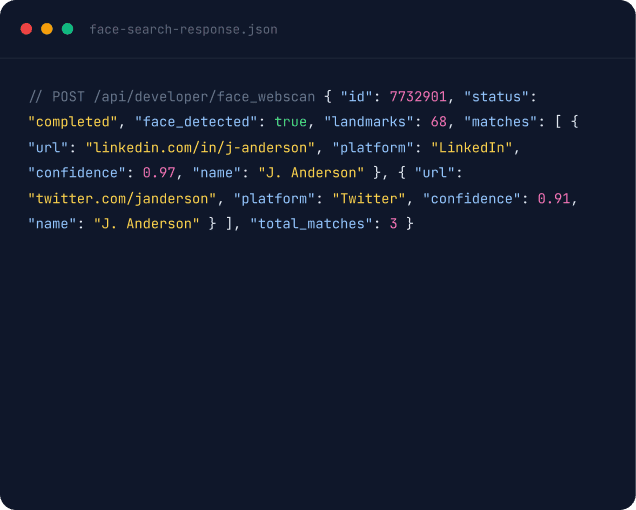
ESPY’s Biometric & Public Data Infrastructure helps enterprise platforms and developer teams cross-reference raw identity inputs with verified court records and legal archives. Built as a scalable data pipeline, the system transforms unstructured legal dockets into clear metadata signals for automated onboarding and trust & safety workflows.

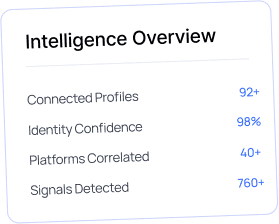
Metric 1: 1.4B+

Profiles & Records Indexed

Metric 2: 150+

Countries Covered

Sub-200ms

API Latency

ESPY core analysis platform evaluates legal data patterns across all available judicial networks, court web archives, and enforcement registries to map legal footprints and link identity markers. Engineered for technical leaders, the architecture combines a high-performance RESTful API with automated validation pipelines to deliver reliable, developer-ready data streams. 

Ingest, Match, and Resolve Legal Data Signals

ESPY provides the data infrastructure necessary to connect legal records with verified digital profiles. Our platform combines high-precision docket correlation and multi-source discovery to streamline complex workflows into a unified, developer-ready interface.

Criminal Identification

  1. Detect and match unique legal record indicators across public judicial archives using submitted subject names, dates of birth, or identification files.
  2. Map connected profiles, alternative metadata, and historical address footprints to bridge the gap between a raw query input and a verified background record.
  3. Maintain system resolution accuracy even when analyzing historical, multi-jurisdictional, or partially localized court records through automated validation engines.

Legal Intelligence

  1. Parse unstructured legal datasets by accessing a comprehensive criminal index compiled from active court registries, law enforcement dockets, and official filings.

  2. Access open legal archives and non-indexed judicial directories to reference court records that traditional search engines fail to surface or structure.
  3. Enrich platform records by linking raw query inputs to normalized case summaries, offense severities, and source-linked court dockets across global jurisdictions.

Monitoring & Tracking

  1. Maintain continuous record consistency checks and receive instant Webhook alerts whenever new legal filings or matching criminal dockets appear across monitored court sources.
  2. Distinguish legitimate cleared applicant profiles from high-risk criminal matches or synthetic identity fraud patterns through automated multi-identifier validation.
  3. Streamline enterprise compliance operations, automated background check pipelines, and risk mitigation audits with structured, real-time JSON payload delivery.
  4.  

Why Technical Leaders Choose ESPY

Traditional screening providers rely on limited, static datasets that only find surface-level matches. ESPY provides the data layer and logic necessary to link court records to verified digital identities across live legal networks.

Traditional Screening Providers

ESPY Criminal Records API

Real-Time Criminal Records Infrastructure for Modern Applications

Developer-First Legal Data Routing.

ESPY converts international legal records and court filings into structured JSON feeds designed for onboarding systems, due diligence workflows, and automated screening platforms.

Built for high-volume, low-latency environments, ESPY provides developers with real-time criminal records infrastructure for modern product workflows.

Trusted by developers, system architects, and trust and safety teams worldwide.

Ronald Richards

CEO & Founder

How ESPY Criminal Records Workflows Work

Connect live court docket matching and global criminal record screening to your system in minutes. ESPY gives developer teams the pipelines to link records and verify subject backgrounds automatically, no matter the query volume.

Ingest Applicant Identifiers

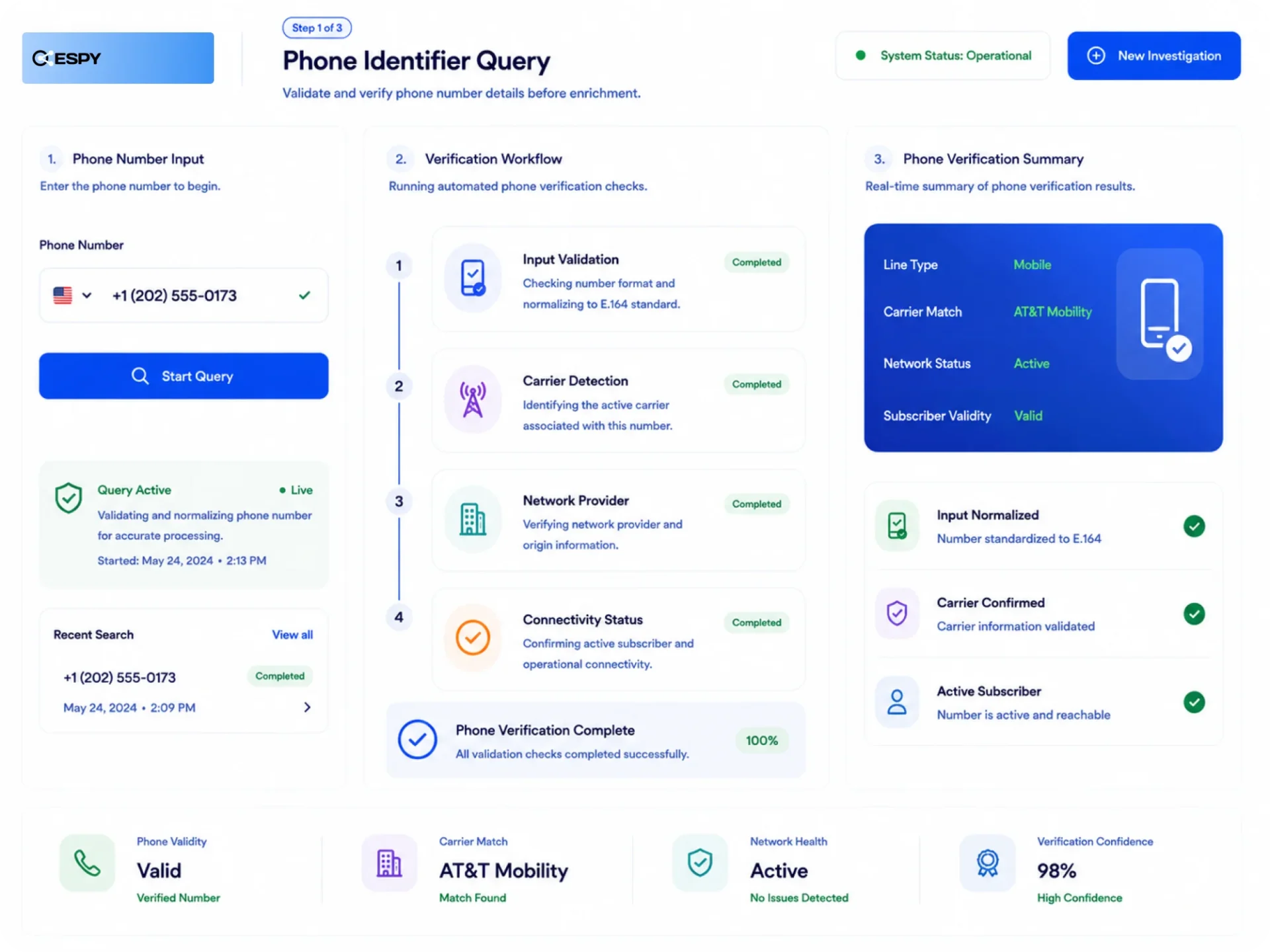
  1. Submit Legal Data: Upload primary subject identifiers (Name, DOB, ID Number, Address History) to our Single Endpoint Integration.
  2. Global Registry Routing: The platform routes queries simultaneously across state, federal, and international judicial archives and enforcement feeds.
  3. Automated Ingestion: The system analyzes unique identifier patterns to match legal records across public networks and deliver standardized metadata logs.

Correlate Records Across Court Archives

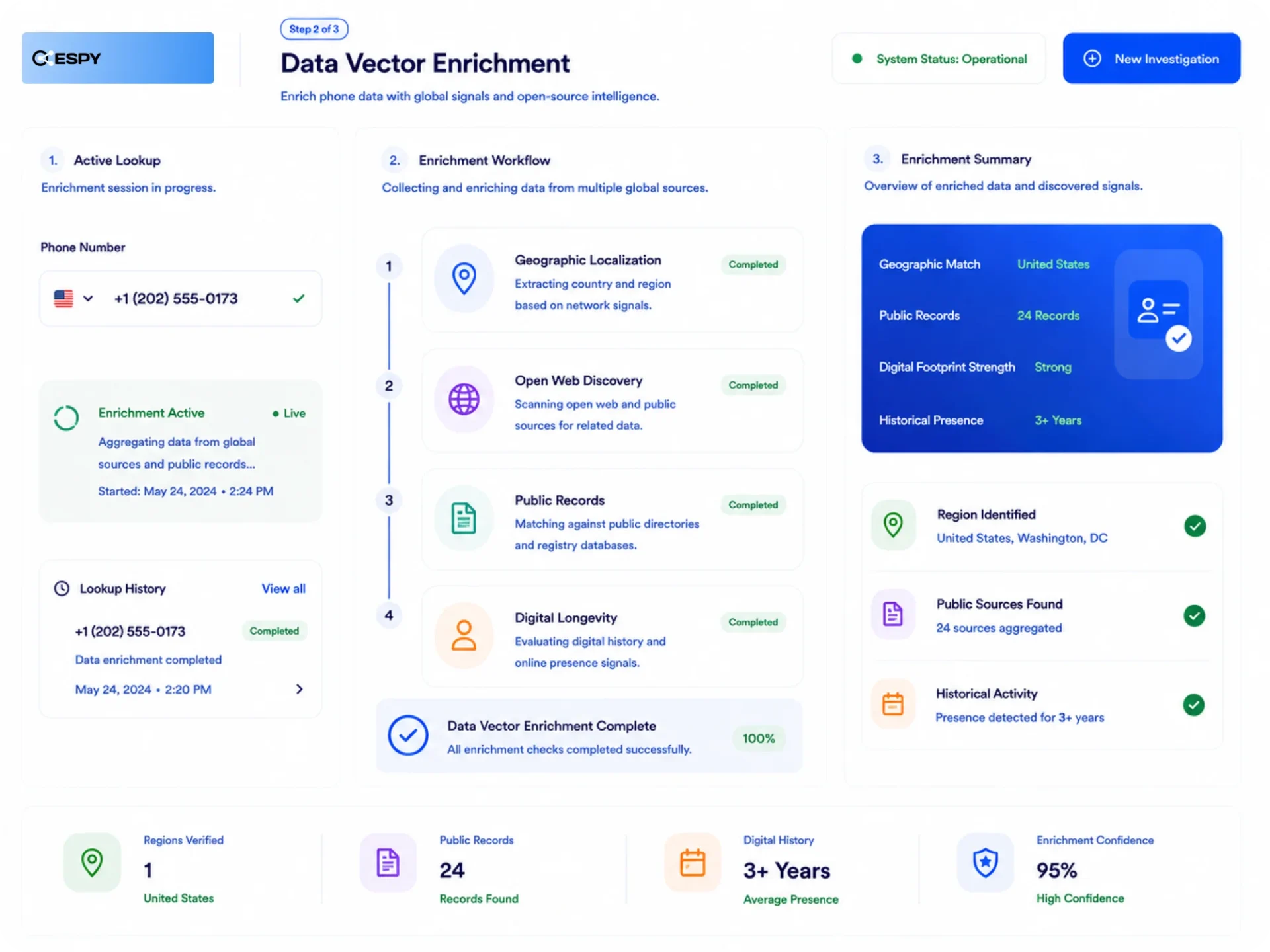
  1. Identify Connections: Discover matching court dockets across active judicial registries to surface case numbers, charges, and dispositions.
  2. Confidence Scoring: Review precise similarity metrics, percentage match weights, and contextual data to align each query with verified court dockets.
  3. Public Source Expansion: Leverage direct registry connections to extract active filings and legal notices that traditional cached search tools miss.

Automate Decisioning & Real-Time Monitoring

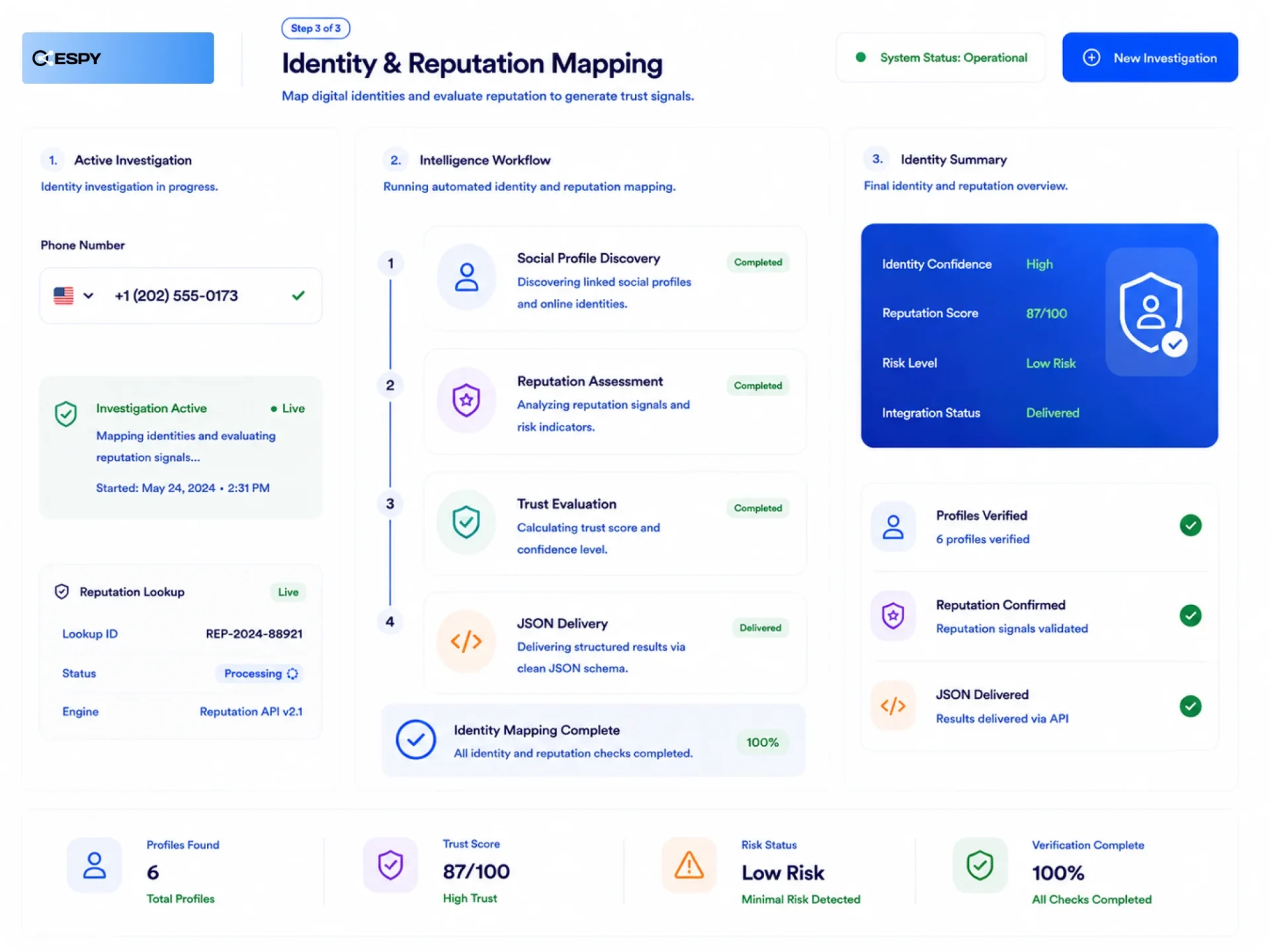
  1. Real-Time Tracking: Subscribe subject profiles to persistent Webhook endpoints to receive automated alerts whenever new legal filings or disposition updates appear.
  2. Record Integrity: Programmatically distinguish pending charges and arrests from confirmed convictions to align onboarding decisions with regional compliance standards.
  3. System Optimization: Streamline enterprise compliance operations, automated background checks, and risk pipelines with raw JSON payload streaming.
  4.  

ESPY Criminal Records API vs. Legacy Screening Methods

Traditional screening providers rely on manual reports and fragmented legal systems. ESPY provides structured legal data feeds designed for automated onboarding and screening workflows.

Feature Traditional Brokers Manual Legal Searches In-House Scraping Tools
Court Registry Access
Live Court Integration
Manual Requests
Manual Visits
Partial Coverage
Response Format
Structured JSON Payloads
PDF Reports
Unstructured Documents
Script-Dependent Output
International Coverage
150+ Countries
Limited Domestic Databases
Regional Only
Restricted by Source
Alias Detection
Automated Alias Detection
Manual Review
Time-Intensive Searches
Limited Support
Continuous Monitoring
Event-Driven Updates
Not Supported
Not Supported
Limited Support
Source Transparency
Linked Court Sources
Opaque Reporting
Manual Verification
Partial Attribution
Scalability
High-Volume API Processing
Human-Limited Workflows
Extremely Slow
Infrastructure Dependent
Integration Method
REST API + Webhooks
Closed Portals
Manual Investigation
Custom Pipelines
Registry Updates
Real-Time Queries
Delayed Refresh Cycles
Manual Follow-Ups
Source Dependent
Workflow Automation
Built for ATS & Onboarding Systems
Manual Decisioning
Human Review Required
Partial Automation

Trusted by Industry Service Providers

How technical leaders integrate the ESPY Phone Intelligence API to power their registration workflows, fraud prevention, and user verification systems.

By integrating the ESPY API, platform teams can now run real-time app metadata checks across global databases, significantly reducing fake account creation and automated bot sign-ups during onboarding.

David Kim

Head of Trust & Safety

Access live profile metadata and regional code registries from over 195 countries to uncover risk indicators that traditional static reverse search directories cannot catch.

Marcus V.

Compliance Director

Risk operations use ESPY’s data layer to instantly detect unverified virtual VoIP lines and suspicious account setups. This adds a critical layer of active fraud detection to our existing user vetting suites.

James P.

Fraud Operations Manager

Built for developers. Our single-endpoint integration allows product teams to scale their user verification capabilities without adding complex system layout overhead or latency.

Ethan C.

Director of Product Security

Verify the active profile status and history of digital footprints linked to a number. Our programmatic query allows platforms to easily separate trusted, long-standing users from newly generated malicious threats.

Carlos R.

Lead Solutions Architect

Anti-fraud service providers leverage our phone intelligence to cross-reference mobile identifiers against open web registries, providing engineering teams with a more complete risk score.

Liam S.

Risk & Integrity Lead

Specialized security firms integrate our data pipeline to automate spam detection and reputation scoring, ensuring their platforms maintain clean user directories and meet regulatory compliance.

Liam A.

Senior Data Engineer

Frequently Asked Questions

Everything you need to know about infrastructure, criminal data freshness, compliance alignment, and technical integration.

How far back do criminal record searches extend?

Coverage depends on local legal retention rules and the digitization status of regional court systems. Most searches support standard seven-to-ten-year lookback windows where legally permitted.

Yes. Every returned JSON payload includes explicit status parameters separating arrests, pending charges, dismissed cases, and confirmed convictions, allowing your platform to apply precise compliance decisioning.

Yes. ESPY aggregates criminal records, active dockets, and watchlists across more than 150 countries, normalizing multi-language legal filings into standard English JSON schemas.

ESPY uses multi-identifier correlation algorithms that evaluate primary inputs alongside secondary indicators such as DOB, address history, legal aliases, and government IDs before calculating a match confidence score.

Yes. ESPY supports persistent monitoring endpoints. You can subscribe subject profiles to Webhook triggers that deliver real-time alerts whenever new dockets or disposition updates appear.

ESPY is built on compliance-by-design principles, operating in strict alignment with GDPR (including Right to Be Forgotten support), CCPA, FCRA, FATF, and 6AMLD mandates for processing public legal data.

Enterprise-Grade Criminal Legal Data Feeds for Your Platform

Access scalable cross-platform data pipelines to verify legal history profiles and stream verified court records directly into your system.

Related Guides

The Missing Piece in Modern Background Checks

Imagine you are about to hire someone, rent out a property, choose a contractor, or enter

How to Do Reverse Phone Lookup: A Practical Guide to Checking an Unknown Number

An unfamiliar number can be a nuisance or the first clue in a fraud review, customer

How to Maximize OSINT With Cognyte Analytics: A Practical Investigation Workflow

Poorly prepared information can weaken an investigation before analysis begins. Investigators studying how to maximize OSINT

Ready to Deploy Enterprise-Grade Criminal Intelligence?